
Rooted in Community
Local Food, Local Voices: A Community Conversation on Regeneration
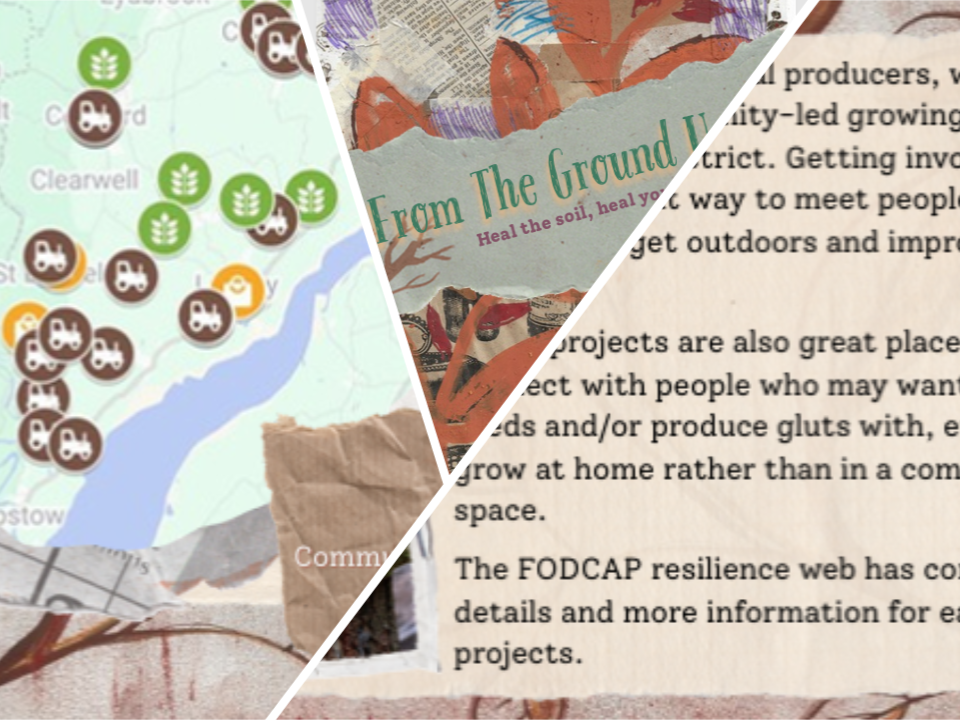
From the Ground Up zine
On Thursday 14 May, sixty people gathered at Redbrook Village Hall for a community screening of Six Inches of Soil. The event was co-organised by the Forest Food Network, FODCAP and the FODDC Team, with funding from a FODCAP grant. The evening brought together farmers, growers and local residents to explore the future of farming and our local food systems.
The evening began with a plant-based curry, prepared by local caterer Kate Thomas of Orchard Kitchen. In keeping with the themes of the film, all food and drink served were locally sourced – from milk supplied by a nearby farm to locally roasted coffee. This commitment to local produce showcased the richness and resilience of our region’s food network.
The event also marked the launch of From the Ground Up, a beautiful zine designed by Field Notes, and created by members of the Forest of Dean LGBTQIA+ community to help people discover ways to support local food producers and get involved in community growing projects.
About the Film: A Call for Regeneration
Six Inches of Soil is a British independent documentary following three young farmers as they challenge the industrial food system and transition towards regenerative and agroecological farming. The film highlights both the urgency of change and the hope offered by farmers working with nature to heal soil, improve health and strengthen local communities.
Its aim is twofold: to sound the alarm on a system that is no longer serving people or the planet, and to inspire farmers, consumers and policymakers to support regenerative approaches.
Reflections from Ragmans Lane Farm
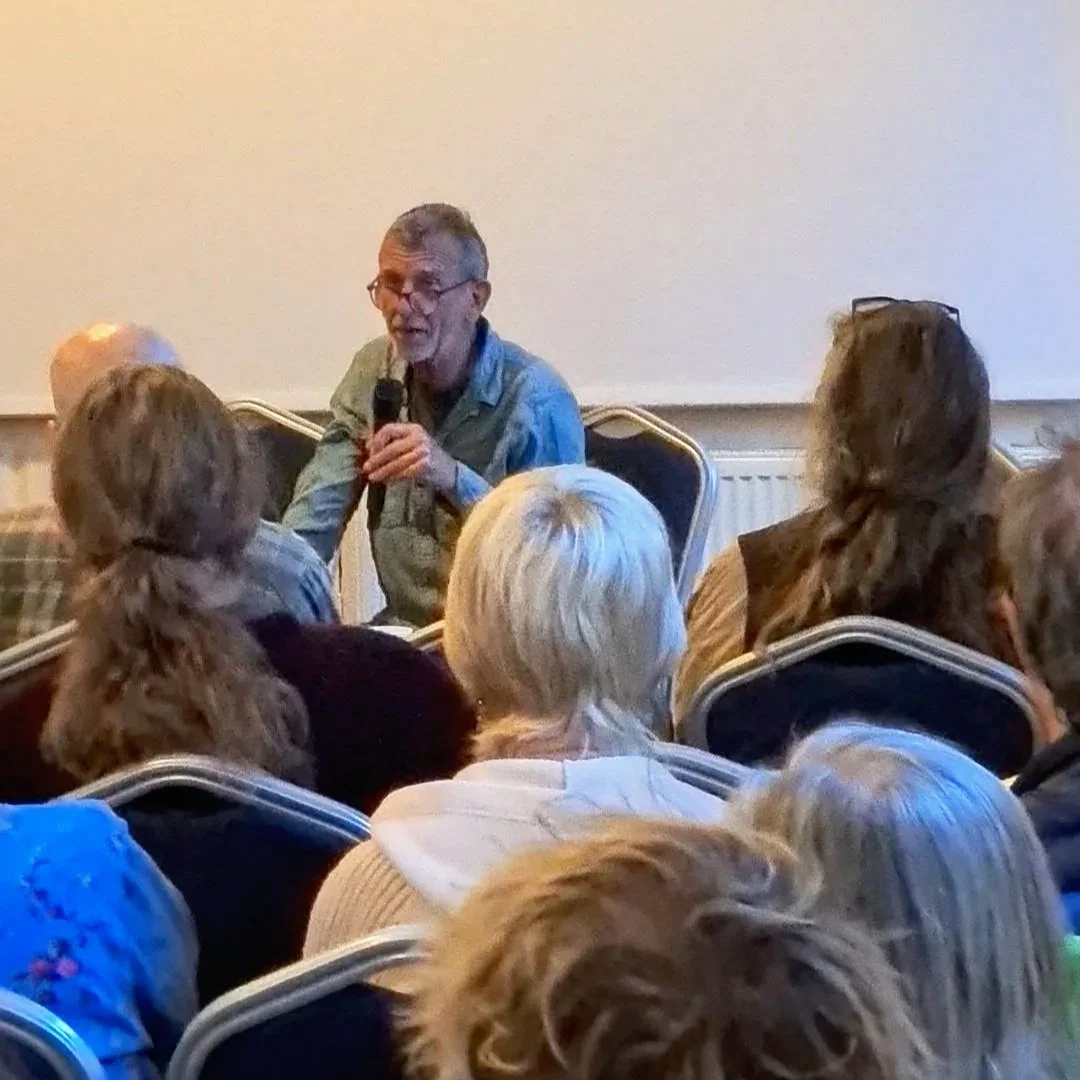
Matt Dunwell opened with his reflections on the film
After the screening, guests heard from Matt Dunwell, who has stewarded Ragmans Lane Farm in the Forest of Dean for more than three decades. Known for its teaching, experimentation and commitment to giving people meaningful access to land, Ragmans has long been a hub for regenerative practice. Matt shared his reflections on the film:
“For me, it’s not a dogmatic film – it shows people with a direction of travel, rather than an idealistic dogma. These are people trying to bring the concept of regeneration into everyday working farms.”
He described how natural systems often accelerate the transition once farmers begin:
“There’s one or two years of trying it rather timidly and then it’s almost as if the natural systems pull you in. Soil actually regenerates very quickly… the argument becomes more and more compelling.”
Matt also acknowledged the economic pressures farmers face:
“The price of diesel and fertiliser… they’re just going through the roof. There are two things pushing and pulling really. It feels like a really, really fertile time for us to start thinking about changing our agricultural systems.”
Panel Discussion: Challenges, Opportunities and Community Action
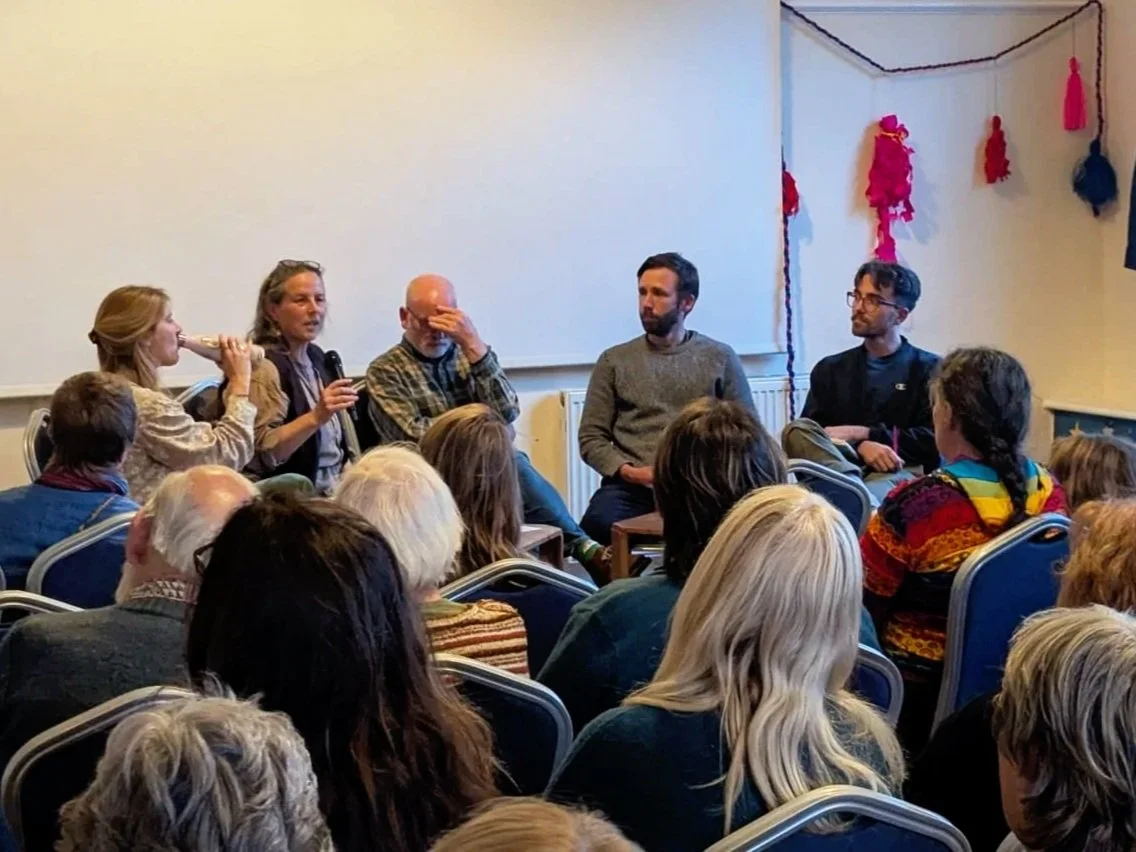
The panel discussion in mid-flow
Following Matt’s introduction, Katie Clubb from FODDC Climate Team facilitated a panel discussion featuring:
Tim Bevan – Senior Wildlife and Farming Manager, Gloucestershire Wildlife Trust
Cllr Beki Hoyland – Green Group Leader
Will Leabeater – Local farmer
Alex Montgomery – Founder of Generation Soil CIC
The panel explored the practical, economic and cultural challenges of transitioning to regenerative farming.
Tim highlighted the limitations of current advisory systems:
“There’s a system of fertiliser use… that tells you exactly which fertilisers to put on the crop. It ignores the soil completely. What your agronomist will not do is tell you how to farm organically and regeneratively. That’s the biggest problem we have.”
Will spoke about the realities of transition:
“It’s a 5–7-year transition to regenerative practices and you can’t just switch off those inputs – you need to wean your land off them. Giving farmers a break, payment holidays and new programmes will help, but lending is still an issue.”
Beki brought the conversation back to consumers and local food access:
“It’s about starting with making good food choices and then building systems that help people make those choices. Our whole system is geared around cheap, easy supermarket shopping. We need to create a market for small producers… perhaps through shared processing facilities that help get local food to local people.”
Alex spoke powerfully about the deeper human connection at the heart of regenerative practice:
“There’s something so powerful about having that relationship with the land. That reciprocal relationship where you’re not just taking from the land, you’re not just exploiting that land – you’re able to give back to it. And I think being able to do that in a community just builds something special that our society doesn’t really see anywhere else.”
The audience were invited to ask questions, share experiences and explore practical ways to strengthen local food systems. A recurring theme was the importance of community - building networks, sharing knowledge and empowering people to advocate for themselves and for the land.
Forest of Dean - its land, its food and its future
The evening was a gathering of people who care deeply about the Forest of Dean - its land, its food and its future. Through shared food, stories and questions, the event highlighted both the challenges and the enormous potential of regenerative agriculture.
Many thanks to everyone who contributed to making the event such a success. Join our mailing list and WhatsApp Community to find out about all our events and updates.